Mentoring: Who are You Helping? Who’s Helping You?

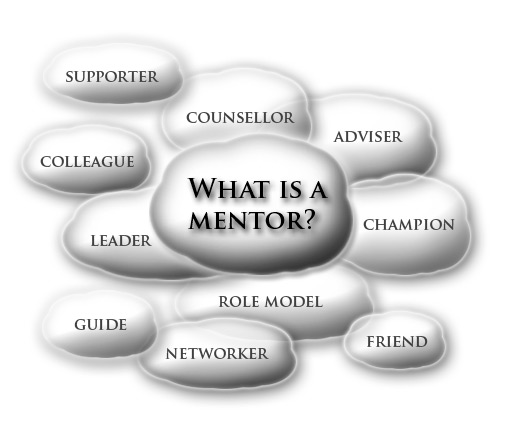
what is a mentorThe business world has long recognized the importance of mentoring.  Education has been slower to embrace the concept, although many states have it in place for teachers who don’t enter the profession through the traditional route and have student teaching experience.  On the whole, this option is not available to librarians and yet those new to the profession need this support far more than teachers.

Most school librarians work alone.  Teachers and administrators assume you learned everything you need to know to do your job at library school, but this is far keep calm - mentorfrom the reality.  Managing the environment without having the structure of a classroom is a challenge in itself. Getting to the “backroom” responsibilities and doing clerical tasks or overseeing a clerk or volunteers (increasingly rare) handling them while still focusing on teaching and meeting student and teacher needs require focus and organizational skills you were not likely to have been taught. Generally, school librarians are thrown into the deep end and have to learn to swim.
In 2007, my colleague Ruth Toor (now retired) and I wrote New on the Job (ALA Editions) to deal with the challenge. I am now working on the second edition.  Ironically, it has become a text book in a number of library school courses. Although I believe it is a solid resource for beginning librarians, it does not replace the benefits of a mentor.

mentor modelMy state association, New Jersey Association of School Librarians, works with our Department of Education to provide mentoring for new librarians.  A handbook (unfortunately in need of updating) guides mentor and mentee through the requirements and responsibilities of the relationship.  Over the years it has been in place, I have taken the opportunity to mentor a number of librarians, giving back to the profession I love.

If you have been a librarian for over five years, consider offering to mentor a newbie.  For those entering the profession, I strongly recommend you seek out a mentor.  Look for someone who is active at the state and/or national level. Don’t be afraid to approach people you think are “famous.”  They are usually more than happy to help.

Your mentor will guide you through the pitfalls of dealing with teachers, administrators, and board members who wander into your library.  They can help you with classroom management and creating a budget. When you need to vent, your mentor is a safe person to whom you can turn.mentor wanted
We cannot afford to have any librarian fail.  It puts their jobs, their programs, and the students and teachers they serve at risk. Ask for help – or be the one to provide it.
 

Tagged with: , , , , ,
Posted in Career

Relationship, Relationship, Relationship – How are yours?

relationshipsWhile the adage in real estate that the three most important considerations are location, location, location, in librarianship the surest way to success is recognizing the three primary rules are relationships, relationship, relationship. Is being current with the latest in tech important?  Definitely!  Do you need to be a skilled teacher?  Of course! Should you be passionate about communicating the love of reading?  Beyond a doubt.

But don’t fool yourself.  None of your skills and competencies will matter if you don’t build and maintain relationships. Here’s one example. I had a co-librarian who was with me for a little over three years and a clerk going for a library degree.  My co-librarian considered the school she attended was far superior and was extremely confident in her tech skills.  However as she was learning, my clerk watched interactions I and my colleagues had with students and teachers. nobody cares how much you know

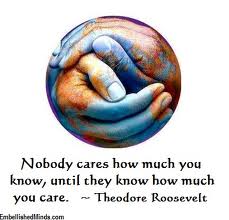
My co-librarian didn’t really like students and preferred to have her desk in a back room with no windows to the main library area.  My clerk, on the other hand, connected regularly with students and teachers, helping as much as she could.  The teachers soon avoided scheduling classes if it meant my co-librarians would teach.  I retired.  My co-librarian proved disastrous (as I had expected), and my clerk –now with a degree—is in charge of the library with a new co-librarian.  I quote Theodore Roosevelt often. “No one cares how much you know until they know how much you care.”

it's all about relationshipsWe are in a relationship business.  We stand or fall based on whether are colleagues want to work with us—either directly in flexible scheduled buildings, or indirectly if fixed schedule schools.  No advocacy program will work unless you have first built the relationships.  You need to out there – in the building, in the district—a visible part of the school community, being the “instructional partner” and friend to the entire staff.  And your students must know you truly care about them. Develop relationships first.  Everything else will follow.

Posted in Uncategorized

My Expanding PLN – Does Yours Need Help?

PLNI had a PLN before the term came into use.  We all did.  Our Personal (Professional) Learning Network was composed of the colleagues we counted on to help us figure out a student, an approach, or sometimes an administrator.  After being on the job for a while, I, like many of you, also became a source.  On the whole, my PLN was limited to those in my school building and a few in my district.

The first big expansion of my PLN occurred when I became involved with my state association.  Now I could draw on a broader group of leaders for advice.  I was luckier than most librarians since back in the 1970s and 1980s, I had a phone in my elementary school library (usually, you had to be a high school librarian to have a telephone).  I realized I was no longer alone.  Help was on the other side of the phone line. aasl

Becoming active in AASL broadened my PLN even further. While I was an early adapter of automating my school library (by this time I was at the high school), there were a significant number of librarians who had led the way.  I drew on their advice when I wrote my RFP ensuring that it would likely go to the vendor I knew from their experience was the one I wanted.  I ended up with an ongoing connection to Harry Chan, president of Media Flex who was behind Mandarin and now has OPALS.

google hangoutToday I still attending state and national conferences because there’s nothing like face to face connections, but added to that is social networking, texting, and emailing which has given me an incredibly rich PLN.  Through listservs, TLChat on Google+, Twitter, and Facebook, I keep learning every day.  Earlier this week I was on a TL Newsline, a Google Hangout with some of the newest additions to my PLN.

What I love about a PLN is that it’s not just learning—it’s personal.  The other day, I was working on the June/July issue of School Librarian’s Workshop and realized I needed another “professional development” article and reached out to Elissa Malespina, one of my new additions.  In an amazingly short turn-around, she sent the article.

It’s all about how we help each other out. It’s always been that way.  Is your PLN expanding?  .  How are you using it?  And remember – if you need support for your PLN, check out our Facebook page – it’s a great place to start!

Posted in Uncategorized

Lifelong Learning in the Digital Age – What about us?

so appyAlmost every day I trip over some new digital tool or resource I hadn’t heard of previously. When I despair over all I don’t know, I remind myself in this day and age, and even in the world of school librarianship, no one knows everything about a subject.  Lifelong learning is not a gentle pursuit, it’s a survival tool.

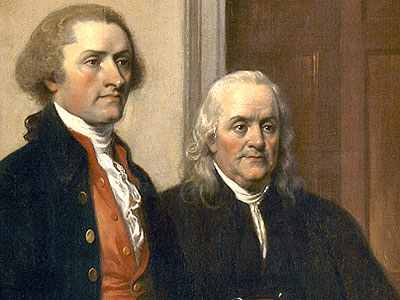
I envy Thomas Jefferson and Ben Franklin.  In so many ways the Age of Enlightenment was a great time to be alive.  Eager, curious minds such as they had could learn everything there was to know.  Their familiarity with science and arts allowed them to make brilliant crossover connections. Tom and Ben

Jefferson, an avid book collector, sold his library of 6,487 volumes to Congress in 1815, and it became the foundation for the Library of Congress.  Jefferson read all his books.  Today’s Library of Congress has over 36 million books and other print materials, 3.5 million recordings, 13.7 million photographs, 5.5 million maps, 6.7 million pieces of sheet music and 69 million manuscripts.  A mind-boggling collection of information –and then we have what’s on the Internet.

For school librarian’s, continuous professional development is a requirement, and counting on what school districts provide is not enough.  We are all responsible for our own professional development.  I have been out of my high school library for nine years and I work hard each day to continue to learn and keep up with our rapidly changing world.

ways to learnHow do I do it?  I read posts on the listservs and Facebook pages to which I belong.  When someone shares a great idea, I follow up.  (Usually I ask them to write an article on it for School Librarian’s Workshop so they can share it with you.)  I do the same with my LinkedIn groups, people I follow on Twitter, and the TLChat on Google+.  (I am going to be on the TL News Night on February 17, 2014.)  I follow a few blogs and get ideas there. (I love Buffy Hamilton’s The Unquiet Librarian.)

I also go to my state conference and to national ones.  For some of you the cost of traveling is prohibitive, but national conferences offer virtual attendance. And I read.  I flip through a number of professional magazines and take time with articles of particular interest to me.  Some days I do better than others.  But I am always learning—and loving it. shared info

What are you doing for your professional development?  How do you keep up with this ever changing environment and model being a lifelong learner?

Posted in Uncategorized

STREAMing into STEM

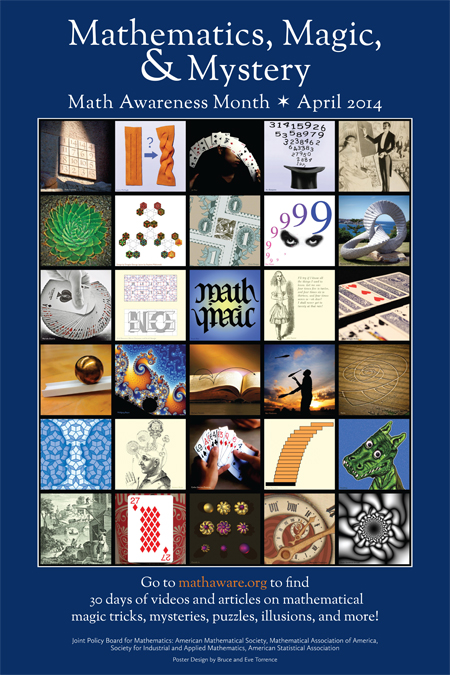
MAM2014While School Librarian’s Workshop subscribers will soon be receiving their February/ March 2014 issue, I am almost finished with the April/May 2014.  With April being Math Awareness Month, I have STEM on my brain.  If you recall a previous blog post on “Chopportunities,” we need to look at all challenges as being a potential opportunity.

As with Common Core, too many librarians regard the initiatives as leaving them out in the cold. Instead of feeling left out of the discussion and seeing STEM subjects as strictly classroom-related, find ways to become part of the learning.  My own natural interests are in literature and history, but I have had wonderful collaborations with science teachers, and, yes, with math teachers as well.  Granted, I didn’t see the latter that often, but the occasions were fun for the kids and for me as well. (There’s a Teaching Together unit on Math in that April/ May issue.)math awareness

You know the STEM acronym, and some of you are aware that the art and music teachers are fairly successfully lobbying to expand it to STEAM. They point to the mental and other connections the arts have to math and science.  Librarians have started a push to extend the acronym even further and make it STREAM—with the “R” standing for Research.

Think of what scientists do.  Can you imagine any of them doing their work without research?  Research is ingrained into their discipline.  Engineers need to research what has been done and what is new on the horizon.  Mathematicians regularly explore their colleagues’ exploration of complex problems.  If students are to be encouraged to pursue career in STEM, they need to learn how research is incorporated.

Convincing teachers of the importance of research in these subject areas is not easy.  Begin by reaching out and sharing resources with them so they come to see you as a partner.  Here’s one you might use http://www.stemresources.co.uk. Others will be in School Librarian’s Workshop.

researchSmall steps today lead to large gains over time for your library program.  Teachers, particularly math teachers, are not likely to come to you with a research project.  You will have to design one based on resources you have available. Show them your proposal and be open to any change they would like to make.  All you need is to get a foot in the door.

Posted in Uncategorized

Who Knows You Are Essential?

the libraryAn interesting discussion has been taking place on the School Librarian’s Workshop Facebook page.  It began when I reposted Ruth V. Small’s report on the  research study she has done at the Center for Digital Literacy (showing “young innovators perceive their school libraries as simply book repositories and their school librarians as largely non-essential for supporting their work.”) She goes on to say that she and other at CDL are “working on project to

1) help librarians become “innovation mentors,” motivating, encouraging and supporting innovation by students in their schools and

2) create “innovation spaces” in their libraries where all students can freely brainstorm, create, experiment, and collaborate on their ideas, with a rich and accessible set of  resources and activities to help them do so.”

Sue Kowalski of NYLA/SSL commented (and posted it on their Facebook page which is where I got it) that she “would be interested in the librarian structure at the school where those kids were surveyed. If the kids were in schools that do NOT support a strong library program, their perception could be a reality.”  Obviously that wasn’t part of the study, but the results are still scary.keep calm

Underneath the results are several important issues.  Of course, the study doesn’t reflect badly on school librarians if these students didn’t have an active program at their schools.  Even if that is the case, too many schools as we know don’t have strong –or sometimes any—library program. Why?

Budget cuts are the simple answer, but the problem goes deeper.  Why didn’t enough people care when library programs were cut or eliminated?  Somehow we have failed to show we are essential.  Stakeholders don’t value us because we have not made our case.  Research studies do not win hearts and minds.  Visual stories do.

Data is good but numbers aren’t making us any friends.  My successor at my last job at a high school library sends her reports to the principal using Animoto and Issu. The reports show students gaining the benefit of a strong program and demonstrate her own tech expertise.  The reports get shared with the Superintendent and the Board.

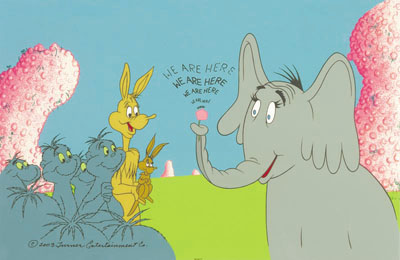
we are hereHow are you sending a message that you and your program are essential?  Is it being received? What changes can you make between now and the end of your school year to make certain people know, as the people of Whoville cry, WE ARE HERE!

Posted in Uncategorized

Questions and Answers

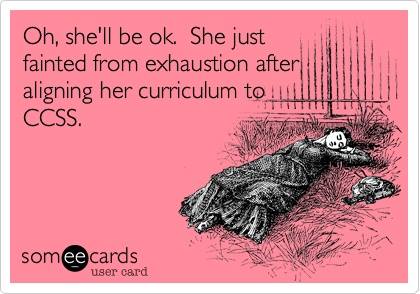
questionsA Buffy Hamilton post (http://dmlcentral.net/blog/buffy-hamilton/libraries-‘sponsors-literacy-and-learning-peeling-back-layers) which I shared on The School Librarian’s Facebook page, reminded me about the important differences between questions and answers.  In the current situation with the Common Core Curriculum, our schools are focused more than ever on ensuring that students know the answers.  It is what testing is all about.  And tests produce the data which in turn drives education.

The idea behind Common Core is that by developing a more rigorous curriculum, students will improve the College and Career Readiness Skills (capitals are those of the Common Core).  The theory is with students better prepared for college and the work world, they will be better capable of competing in the 21st century.  But answers merely show students have demonstrated they have mastered the material as presented.  They understand what has already been done—been achieved.  It doesn’t move them forward.  Answers are an end.

Innovation is powered by questions.  Buffy asks an incredible number of questions to assess where the library program has gone and where it needs to move to be even better.  We all need to focus more on great questions, which is what true critical thinking is. So here are some questions to start you off:

Based on what you already know, what does do you think is needed next?

What do you need to know more about?

What might be done differently?

Where can you get support and help?CC exhaustion

Inquiry based learning which is at the heart of the AASL Standards for the 21st-Century Learner, requires students to develop questions to direct their research into areas of interest to them around a given topic.  Increasingly, teachers are expected to formulate Essential Questions for units and lessons.  (I do a workshop on Essential Questions and Enduring Understandings.)  Many colleges want students to have an Essential Question rather than a thesis argument for their research projects.

And yet—in the classroom, it’s answers that count.

learn 360Wouldn’t it be wonderful if someplace on the high stakes tests, students were expected to develop one or two questions based on a reading they did or a problem they solved?  Wouldn’t that show greater College and Career Readiness?  In the meantime, we as librarians can help.  Model the importance of questions by encouraging students to ask them and applauding the deep reasoning it shows.  This is one more way we can carry out, the New York Library Association/Section of School Librarians ‘(NYLA/SSL) great tag line – The Library IS the Common Core.

Posted in Uncategorized

Happy New Year – Start Running!

janusI am reminded that January is named for the Roman God Janus, pictured as looking forward and backward.  Once we are past our childhood, it seems inevitable that the New Year causes us to reflect on the year gone by and anticipate the year ahead.  It is a time for resolutions and plans.

As I look back on the year, it was marked with several professional and personal accomplishments.  My third book for ALA Editions, School Librarian’s Career Planner (my first book for the profession done without my long time co-author Ruth Toor) was released in June.  The issue of Knowledge Quest on “Dewey or Don’t We” for which I was guest editor has encouraged the debate on the topi,c and I expect the discussion will continue.  School Librarian’s Workshop, a passion of mine, continues to reach new  librarians.  Our Facebook page https://www.facebook.com/#!/groups/57409801076 has 479 members as of this writing, and I am looking forward to the 500th member joining. (We have a gift planned for that person!)

In addition, as I have written about, I reached a long held personal as well as professional goal with the publication of my first YA fantasy novel, Woven through Time, on October 9.  I was overjoyed to get three five-star reviews for it on Amazon—and am hoping for more.  Perhaps some author visits or book signings are in my future.

alice runningBut as Alice was told when she was in Wonderland, you need to run just to remain in place.  To get anywhere, you need to run even faster. So I am looking toward my goals and plans for 2014. The year will begin with ALA Midwinter in February where I will be busy with Affiliate Assembly and chairing my AASL Committee on Advocacy among other meetings.  In February I will be heading to San Diego where I will be presenting two pre-con workshops on Essential Questions and Enduring Understandings at the California School Librarian’s Association Conference. I love connecting with new librarians around the country, so if you are interested in having me present or keynoteat your state’s conference, please email me at hilda@slworkshop.net.

To doAlso on my to-do list for 2014 is working on the second edition of New on the Job for ALA Editions.  I anticipate a November publication date.  There will hopefully be two writing retreats with my writers group where I plan to get started on a sequel to Woven through Time and see what I can do about a long-stalled book called The Golden Dragon.

Most of all, I look forward to time with my husband of fifty-one years, my daughter and her family (including two grandsons) and my son and his boys—although the oldest, now 16 doesn’t look very boyish at 6’3”+.   Family and friends are always on my agenda.  They make it all worthwhile.

Happy New Year to you all.  May 2014 bring you more of your dreams.

Posted in Uncategorized

How We Listen – What We Say

Students-Listening-in-ClassAs a member of ASCD, I receive their monthly Education Updates in the mail.  Normally, I give it a cursory reading, but the lead article in the December issue, “More than Words: Developing Core Speaking and Listening Skills” made me pause.  As librarians –and teachers—we focus most of our attention on reading and reading comprehension, but learning occurs in social interchanges that we have been overlooking.

Active listening allows us to develop better relationships with our colleagues and administrators.  The skill requires first and foremost listening to what the other person is saying without thinking about what your response will be.  Techniques include restating what you think you heard and asking clarifying questions.  More details can easily be found in an Internet search.

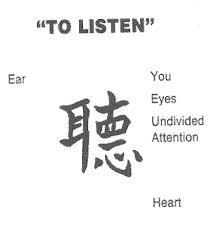
ASCD says our students need to develop the same skill set.  The article suggests “Bounce Cards” to coach students (NOTE: the original use of Bounce Cards are actually pieces of material used in photography to bounce light back toward the subject!) . The card includes “bounce” statements such as “that reminds me of…” and “I agree, because …” followed with summing up statements such as “So, if I understood you correctly …” and “I like how you said…”  Finally, there are inquiring statements such as “I am not sure I understand …” and “Can you tell me more about that?”  We need to give students the help they need to become better listeners, and we also must model the behavior.listen in chinese

Elsewhere in the same issue there is an article on Targeting Feedback to Support Self Regulation (even Cookie Monster is working on this).  Too often we speak thoughtlessly not realizing the interpretation the listener is putting on our remarks.  If we tell a student she did well on a task and must be smart, when she doesn’t do well, she will feel stupid.  Praise the work and the effort not the result.  Be specific in your praise—and only when deserved, and provide students with tools for self-assessment. The AASL Standards for the 21st-Century Learner have a whole strand devoted to it.

As I thought about the concept of feedback, it occurred to me that by praising only success (the outcome) we are promoting a fear of failure, and, as I blogged a few weeks ago, true success only comes from dealing with failure.  By listening and speaking with heightened awareness we will help our students to do better, and we will be building stronger relationships within our educational community. And then,perhaps, we may find a way to actively and appropriately praise mistakes as well.

Posted in Uncategorized

The Dewey Debate

m dewey

I had the great honor to be asked to guest edit the November/December 2013 issue of Knowledge Quest, the journal of AASL. The theme was Dewey or Don’t We, a pro-con look at a growing practice among school (and public librarians) to go from the Dewey Decimal System to a genre-based one. I am again gathering my thoughts on the topic in preparation for writing an article for the February/ March 2014 issue of School Librarian’s Workshop and thought I would give my blog readers a preview.

The genesis of the Knowledge Quest issue goes back to the AASL Affiliate Assembly meeting at ALA Annual in 2012.  The delegates from the Kansas Association of School Librarians brought a Statement of Concern asking AASL for guidance and leadership on how to approach a growing trend of genre-fying the collection.  In addition to wanting AASL to take a position, KASL wanted some way to standardize the new classifications if that is the way we were going.  The resolution passed, meaning the AASL Board had to address it.  A “Hot Topic” panel was assembled for ALA Midwinter 2013, and I was the facilitator.  The room was packed—standing room only—and while opinions didn’t necessarily change, most left with new perspectives and new questions.  To deal with that, it was decided to devote one issue of Knowledge Quest to further explore the positives and negatives on both sides. knowledge-quest

I worked hard as facilitator to stay neutral, but my personal position going into the Hot Topic panel was Dewey works, there is no reason to change.  On the other hand when I was working as a high school librarian in New Jersey I had pulled out Classics and SciFi/Fantasy from my fiction collection.  What became obvious at the panel, and more so in the Knowledge Quest issue, was there are far more than two sides to consider.

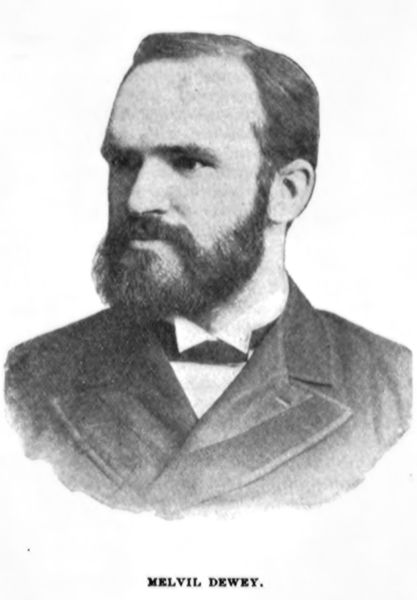
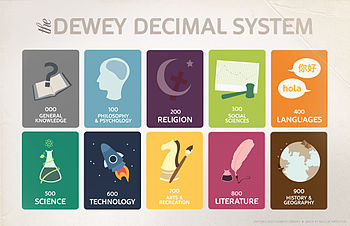
Dewey_Decimal_System_PosterSome key points:  choose what will work best for your students; whether you stay with Dewey or change, make sure you have good signage; and you don’t need to take an all or nothing approach.  My own opinion has shifted quite a bit.  The problems within Dewey are real.  We have worked hard to eliminate the “shushing” librarian stereotype, maybe it’s time to get rid of our association with Dewey.  He created the Dewey Decimal Classification System in 1876.  The world has changed drastically since then.

If you are an AASL member, you received your issue and I hope you read it through.  If you are not a member, do try to purchase a copy from AASL.  This is a subject that is not going away.

Tagged with: , , , ,
Posted in Career